

propensity scoring + crm: 7 ways to transform outreach
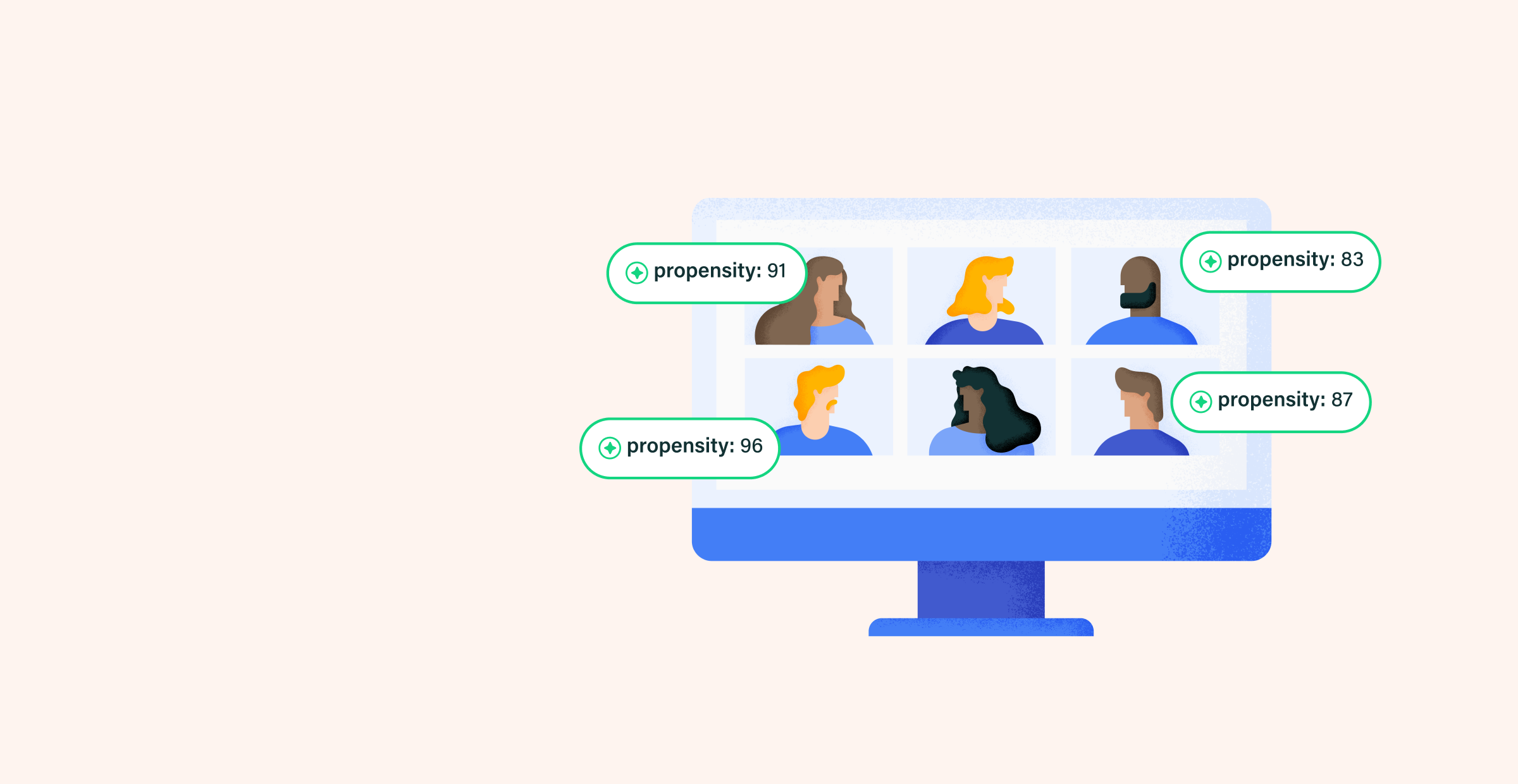
Most health systems segment by demographics and hope for the best. Smart ones layer behavioral intelligence over CRM data to predict who will actually respond.
Dr. Martinez stared at her screen, frustrated. Her health system's healthcare CRM software showed 12,000 patients overdue for colonoscopy screenings. The marketing team had sent three rounds of reminders. Response rate? A dismal 2.3%.
Meanwhile, across town, her colleague Dr. Patel was celebrating a 47% conversion rate on the exact same campaign. Same demographic. Same message. Different approach: her team layered propensity scoring in healthcare over their CRM data, creating what she called ‘campaigns that breathe with patient intent.’
The difference wasn't luck. It was precision. And it's rewriting the rules of patient outreach.
the gap between knowing and understanding
Most healthcare organizations are drowning in patient data while starving for patient engagement. Your healthcare CRM software dutifully tracks everything, but knowing that Maria is 52, commercially insured, and lives in your service area doesn't tell you whether she'll actually book that cardiac screening you're promoting.
This is where traditional patient engagement CRM approaches hit a wall. They segment by demographics and clinical fit, creating broad categories that look logical on paper but ignore the behavioral reality underneath. Two patients with identical profiles in your system might have wildly different engagement trajectories. One actively manages their health, responds to digital outreach, and books preventive visits. The other only appears for emergencies and rarely opens your messages. Legacy segmentation treats them identically. Propensity scoring sees them for who they really are.
Here are the seven strategic intersections where propensity scoring in healthcare and patient engagement CRM unite to transform patient outreach optimization.
1. healthcare data analytics gets personal
Healthcare data analytics becomes transformative when it stops reporting what happened and starts predicting what will happen next. This is the first union between propensity scoring in healthcare and CRM systems: the shift from descriptive to predictive.
Machine learning models analyze years of patient behavior patterns, appointment trends, response rates, portal usage, and clinical encounters to identify the subtle signals that indicate engagement readiness. These aren't hunches or gut feelings. They're statistically validated predictions based on how thousands of similar patients behaved in similar situations.
Platforms like Cured don't just calculate these scores; they operationalize them. The system provides ready-made propensity models for major service lines: cardiology, orthopedics, and gastroenterology, along with general scores for lead qualification and digital service enrollment. Your healthcare CRM software suddenly knows not just who your patients are, but what they're likely to do next.
2. channels that adapt, not broadcast
The second change occurs when propensity scores drive personalized healthcare marketing across all channels. Rather than transmitting the same messages in the same medium to all individuals who fulfill the minimum requirements of eligibility, you create adaptive paths to follow depending on the likelihood of interaction and their interests.
Orthopedic patients who are high propensity to care are provided with direct scheduling pathways that offer convenient booking options. Patients with medium propensity receive information on joint health initially, creating awareness before the request. Low-propensity patients? Your patient engagement CRM does not engage them at all and avoids losing trust by not bothering them without need.

3. timely campaigns that match patient rhythms
The third method of how these technologies combine the solution is the most ancient question of healthcare marketing: when to make a call. Its old-fashioned healthcare CRM applications follow strict schedules- remind 7 days before appointments, follow up 3 days after no-show, send preventive care messages monthly.
However, patient readiness doesn't follow a calendar. It follows life circumstances, health awareness moments, and personal decision-making patterns that vary wildly between individuals. Healthcare data analytics combined with propensity scoring identifies these micro-moments of receptivity.
4. investing in patients who are ready to engage
When propensity scoring in healthcare guides campaign strategy, marketing budgets stop subsidizing low-yield outreach and start investing in high-probability conversions.
Consider a preventive screening campaign. Without propensity scoring, your patient engagement CRM might target 15,000 eligible patients with equal intensity. With propensity models, you discover that 3,000 of those patients have an 80% likelihood of scheduling, 7,000 have a 40% likelihood, and 5,000 have less than 10% likelihood.
The smart move? Invest heavily in converting that high-propensity segment with multi-touch campaigns and premium channels. Use lighter-touch approaches for the medium group. Save the low-propensity patients for later, when their circumstances might change.
This precision doesn't just improve ROI on individual campaigns. It fundamentally shifts how healthcare organizations think about patient acquisition costs and lifetime value.
5. mass personalization that doesn't feel mass-produced
The fifth point is dedicated to the personalization paradox: how to make thousands of individual patient experiences without making them sound like a robot or factory products?
Healthcare CRM software deals with technical infrastructure: following preferences, controlling consent, and channel coordination. Propensity scoring introduces the addition of a layer of intelligence, which renders personalization genuine-looking as opposed to algorithmic.
6. identifying the ‘why’ behind patient no-shows
Healthcare data analytics can also be used to determine the exact impediments that are holding back patients, when propensity models can identify patients who are most likely to delay or avoid needed care.
Is it scheduling friction? Cost concerns? Lack of awareness? Previous negative experiences? The unified intelligence from healthcare CRM software and propensity scoring surfaces these patterns, enabling health systems to address root causes rather than symptoms.

7. the algorithm that learns from every campaign you run
The seventh and perhaps most powerful integration is the feedback loop. Every campaign run through propensity-powered healthcare CRM software generates new behavioral data. Did high-propensity patients respond as predicted? What about the medium group? Were there unexpected conversion patterns?
These insights feed back into the machine learning models, making predictions progressively more accurate. Your patient outreach optimization doesn't plateau; it compounds. Six months in, your models understand your patient population better than any human analyst could. Twelve months in, they're predicting engagement with remarkable precision.
Platforms like Cured are purpose-built for this continuous improvement cycle. The system doesn't just set and forget propensity models; it recalibrates them constantly based on actual patient behavior within your specific population.
you have the data. you're just not using it right.
Every failed campaign leaves behavioral breadcrumbs in your healthcare CRM software. Every ignored email signals something about timing or relevance. Every completed appointment reveals a pattern about patient propensity.
Most health systems collect this data and do nothing predictive with it. They segment by age and zip code, send mundane messages, and wonder why engagement stays flat.
The breakthrough isn't gathering more data- it's applying propensity scoring in healthcare to the data you already have. Dr. Martinez had the same information as Dr. Patel. She just wasn't extracting predictive intelligence from it.
Ready to make your data work harder? Cured turns patient outreach optimization from reactive to predictive. Same data. Exponentially better results.

